
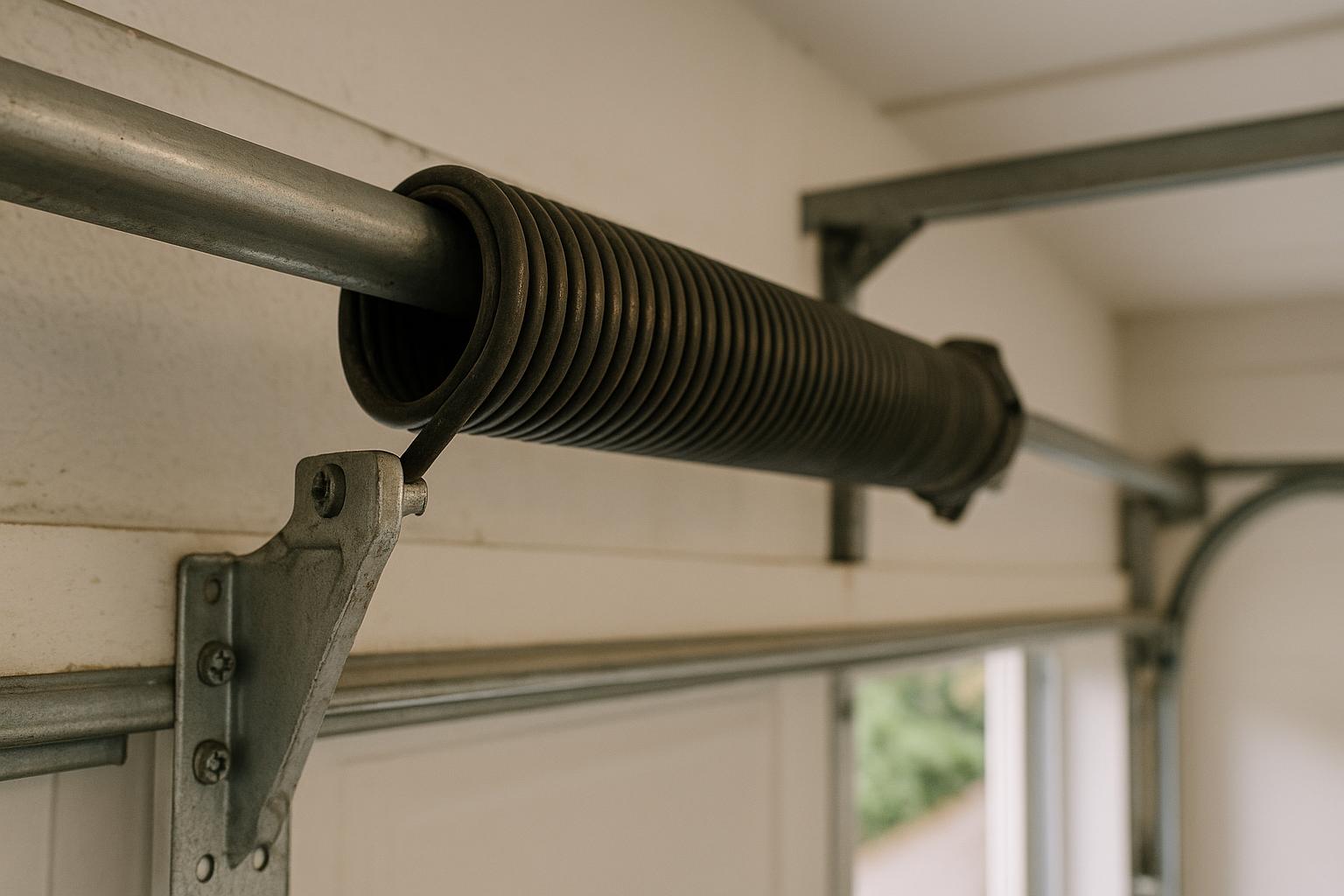
Your Garage Door Springs Are Doing More Work Than You Think
Every time you open and close your garage door, the springs are doing the heavy lifting — literally. A standard two-car garage door can weigh anywhere from 150 to 250 pounds, and it's the springs that counterbalance all of that weight. Without them, your garage door opener couldn't move the door at all.
For homeowners in Orlando, where the garage is often the most-used entry point to the house, those springs get a serious workout. Between daily commutes, weekend errands, and kids coming and going, it's not unusual for a household to cycle their garage door four to six times per day. That adds up fast — and every cycle brings your springs one step closer to the end of their lifespan.
So how often should you actually replace your garage door springs? Let's break it down.
How Long Do Garage Door Springs Last?
The lifespan of a garage door spring is measured in cycles. One cycle equals one full open-and-close of the door. Most standard torsion springs are rated for approximately 10,000 cycles. If your household averages four cycles per day, that works out to roughly seven to eight years of use before the springs reach the end of their rated life.
High-cycle springs are also available and can be rated for 20,000, 25,000, or even 50,000 cycles. These premium springs cost more upfront but can last significantly longer — sometimes 15 to 20 years or more depending on usage.
Factors That Affect Spring Lifespan
- Frequency of use: A busy household with multiple drivers will wear springs faster than a single-occupant home.
- Climate and humidity: Orlando's humid subtropical climate can accelerate corrosion on uncoated springs, shortening their lifespan.
- Maintenance: Springs that are regularly lubricated and inspected tend to last longer than neglected ones.
- Proper installation: Springs that were incorrectly sized or improperly installed may fail prematurely.
- Door weight: Heavier doors — especially insulated or wood-panel doors — put more stress on the springs with every cycle.
Warning Signs Your Garage Door Springs Are Wearing Out
Springs rarely fail without giving you some advance warning. Knowing what to look for can help you schedule a replacement before you're stuck with a door that won't open. Here are the most common signs:
1. The Door Feels Heavier Than Usual
If you disconnect the opener and try to lift the door manually, it should feel relatively light and easy to move. If it feels noticeably heavy or you struggle to lift it past waist height, the springs are likely losing tension.
2. The Door Opens Unevenly or Crooked
If one spring is weaker than the other (on a two-spring system), the door may rise unevenly. You might notice one side lagging behind or the door looking slightly tilted as it moves along the tracks.
3. Visible Wear or Gaps in the Spring Coils
Take a look at your torsion springs, which are mounted on the bar above the door. If you see gaps between coils, stretched-out sections, or visible rust and corrosion, those are signs the springs are deteriorating.
4. Loud Bang From the Garage
If you hear a loud bang — almost like a firecracker — coming from your garage, a spring has likely already broken. A broken torsion spring will have a visible gap in the coil. When this happens, do not attempt to operate the door. A broken spring means the full weight of the door is unsupported, and operating it can be dangerous.
5. The Opener Struggles or Strains
Your garage door opener is designed to move a counterbalanced door, not to lift the full weight on its own. If the springs are failing, you may notice the opener working harder, moving slower, or even stopping partway through the cycle. Continuing to run the opener in this condition can burn out the motor.
Should You Replace Springs Before They Break?
Absolutely. Proactive spring replacement is always safer and more convenient than waiting for a failure. Here's why:
- Safety: A broken spring releases a tremendous amount of stored energy. While modern springs are typically contained on the torsion bar, the sudden failure can still be startling and potentially hazardous.
- Avoiding being locked out: Springs tend to break at the worst possible time — when you're leaving for work or coming home late at night. A proactive replacement lets you schedule the work on your terms.
- Protecting your opener: Running your opener against a door with failing springs puts unnecessary strain on the motor and drive system, potentially leading to a second expensive repair.
If your springs are approaching the seven-year mark and you haven't had them inspected, it's a good idea to have a technician take a look. For homeowners in areas like Kissimmee, Winter Park, and Altamonte Springs, where daily garage door use is the norm, staying ahead of spring failure is one of the smartest maintenance moves you can make.
Can You Replace Garage Door Springs Yourself?
This is one of the most common questions we get, and the answer is straightforward: spring replacement is not a DIY job. Garage door torsion springs are under extreme tension, and improper handling can result in serious injury. Professional technicians use specialized tools and have the training to safely unwind, remove, and install springs.
Extension springs, which run along the horizontal tracks on either side of the door, are slightly less dangerous but still require proper knowledge of safety cables and correct sizing. In either case, the risk simply isn't worth the savings.
What to Expect During a Professional Spring Replacement
When you call Precision Garage Door of Orlando for a spring replacement, here's what the process typically looks like:
- Inspection: Our technician inspects the springs, cables, drums, and overall door balance to assess the full picture.
- Recommendation: We'll explain what needs to be replaced and give you options, including standard and high-cycle spring upgrades.
- Replacement: The old springs are safely unwound and removed, and new springs are installed, wound to the correct tension, and tested.
- Full system check: We test the door balance, check the opener operation, lubricate moving parts, and make sure everything is running smoothly before we leave.
Most spring replacements are completed in about an hour, and we carry the most common spring sizes on our trucks so there's usually no need for a second visit.
Keep Your Garage Door Running Safely in Orlando
Your garage door springs work hard every single day, and they won't last forever. By knowing the warning signs and scheduling regular maintenance, you can avoid unexpected breakdowns and keep your home secure.
If you're in Orlando, Sanford, Ocoee, or anywhere in the surrounding metro area and your garage door springs are showing signs of wear, don't wait for them to snap. Call Precision Garage Door of Orlando to schedule an inspection. We'll show up on time, give you an honest assessment, and get the job done right.