
Why Is Your Garage Door So Loud?
You press the button, and instead of a smooth, quiet operation, your garage door sounds like a freight train rolling through your home. If your garage door has started making grinding, squealing, rattling, or banging noises, you're not alone. It's one of the most common complaints we hear from homeowners across Orlando, and it's almost always a sign that something needs attention.
The good news is that most garage door noises have identifiable causes, and many of them are fixable before they turn into expensive repairs. Let's walk through the most common reasons your garage door is making noise and what you can do about each one.
1. Worn or Dry Rollers
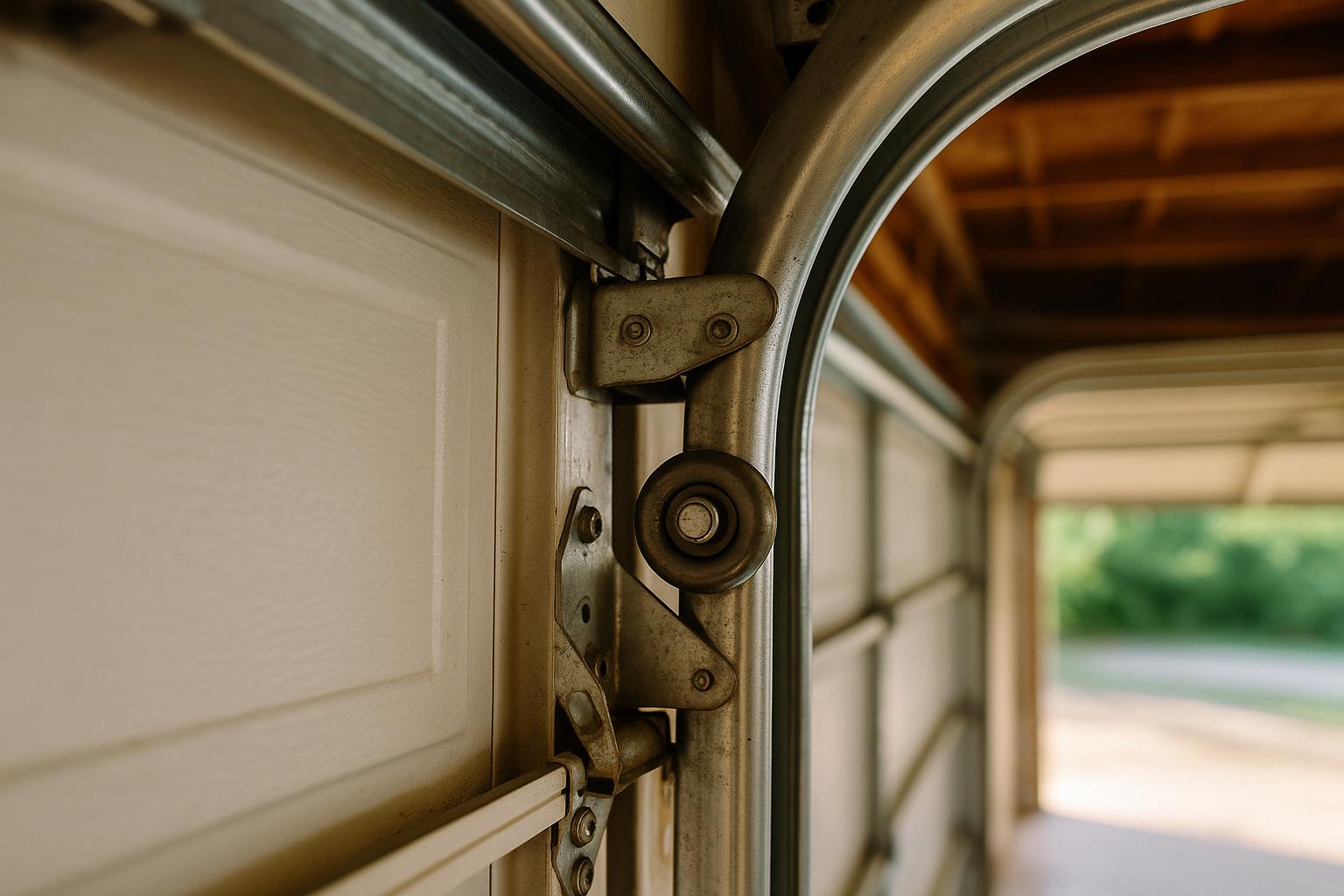
Garage door rollers are small wheels that guide your door along the tracks as it opens and closes. Over time, these rollers wear down, and the bearings inside them dry out. When that happens, you'll typically hear a high-pitched squealing or grinding sound every time the door moves.
Metal rollers are especially prone to noise as they age. If your home has steel rollers and they haven't been replaced in several years, there's a good chance they're the culprit. Upgrading to nylon rollers is one of the most effective ways to reduce garage door noise. Nylon rollers operate much more quietly and don't require as much lubrication as their metal counterparts.
What You Can Do
- Inspect the rollers visually. If they look cracked, chipped, or worn, it's time for a replacement.
- Apply a garage door-specific lubricant to the roller bearings. Avoid using WD-40, which is a solvent and not a long-term lubricant.
- Consider upgrading to nylon rollers for a quieter operation.
2. Loose Hardware
Your garage door moves up and down hundreds of times a year. All that vibration gradually loosens nuts, bolts, and brackets throughout the system. Loose hardware is one of the most common causes of rattling and vibrating noises, and it's often the easiest to fix.
What You Can Do
- Use a socket wrench to tighten all the bolts on the door's hinges, brackets, and track supports.
- Check the bolts on your garage door opener's mounting bracket as well — a loose opener can amplify vibrations through the ceiling.
- Don't overtighten. Snug is enough. Overtightening can strip the holes or warp the hardware.
3. Lack of Lubrication
A garage door has a lot of moving metal parts — springs, hinges, rollers, and bearing plates. When these parts aren't properly lubricated, they create friction, which leads to squeaking, grinding, and groaning noises. Orlando's humid climate can actually accelerate this problem because moisture promotes rust and corrosion on metal components.
What You Can Do
- Lubricate all moving parts with a silicone-based or lithium-based garage door lubricant at least twice a year.
- Focus on the torsion springs, hinges, rollers, and bearing plates at the top of the door.
- Wipe away any old grease or debris before applying fresh lubricant.
4. Worn or Unbalanced Springs
If you're hearing a loud banging or popping sound, your garage door springs may be the issue. Torsion springs bear the full weight of your garage door, and as they age, they can lose tension or develop weak spots. An unbalanced spring forces the opener to work harder, which creates additional strain and noise throughout the system.
A loud bang from the garage when no one is using the door could mean a spring has actually broken. This is a serious safety issue and should never be handled as a DIY project.
What You Can Do
- Test your door's balance by disconnecting the opener and manually lifting the door halfway. If it doesn't stay in place, the springs may be unbalanced.
- Do not attempt to adjust or replace springs yourself. Torsion springs are under extreme tension and can cause serious injury. Call a professional for spring repair or replacement.
5. Bent or Misaligned Tracks
The metal tracks on either side of your garage door guide it as it opens and closes. If a track gets bent, dented, or knocked out of alignment, the door will scrape and grind against it as it moves. You might also notice the door hesitating or jerking during operation.
Track misalignment can happen from accidentally bumping the track with a car, from foundation settling, or simply from years of normal wear and tear. In a city like Orlando where homes sit on sandy soil, subtle shifts in the foundation aren't uncommon and can throw tracks out of alignment over time.
What You Can Do
- Visually inspect both tracks for obvious bends, dents, or gaps between the track and the rollers.
- Minor alignment issues can sometimes be corrected by loosening the track brackets, gently tapping the track back into position, and retightening.
- For significant bends or damage, it's best to have a technician assess and repair the tracks to avoid further damage to the door.
6. An Aging or Vibrating Garage Door Opener
Older chain-drive garage door openers are notoriously noisy. The metal chain that pulls the door creates a rattling, clanking sound that echoes through the garage and into your living space. If your opener is more than 15 years old, the motor itself may also be struggling, adding a humming or buzzing noise to the mix.
What You Can Do
- If your opener uses a chain drive and noise is a concern, consider upgrading to a belt-drive opener. Belt-drive systems use a reinforced rubber belt instead of a chain, making them significantly quieter.
- Install a vibration isolation kit between the opener and the ceiling to reduce the noise that transfers into your home.
- If the motor sounds strained or the opener is outdated, a new opener can make a dramatic difference in both noise and reliability.
7. Damaged or Worn Hinges
Hinges connect the individual panels of your garage door and allow them to flex as the door bends around the tracks. Over time, the holes in the hinges can become elongated, or the hinge itself can crack. When this happens, you'll often hear a squeaking or popping noise, and you may notice the door wobbling slightly during operation.
What You Can Do
- Inspect each hinge for visible wear, cracks, or elongated bolt holes.
- Replace any damaged hinges promptly. A failing hinge can cause the door to bind or come off the track, which creates a much bigger — and more expensive — problem.
When to Call a Professional
Some garage door noises are easy to address with a can of lubricant and a socket wrench. Others point to problems that require professional tools, training, and experience to fix safely. As a general rule, you should call a garage door technician if:
- You suspect a broken or unbalanced spring.
- The tracks are significantly bent or the door is coming off the track.
- The noise is accompanied by the door not opening or closing properly.
- You've tried basic maintenance and the noise persists.
- Your opener is old and struggling to lift the door.
At Precision Garage Door of Orlando, we diagnose noisy garage doors every day for homeowners in Orlando, Winter Park, Kissimmee, and surrounding communities. Our technicians arrive on time, pinpoint the source of the noise quickly, and provide honest recommendations — whether that means a simple lubrication, a roller replacement, or a full opener upgrade.
Don't Ignore the Noise
A noisy garage door is more than just an annoyance. It's your door telling you that something is wearing out, coming loose, or breaking down. Addressing the problem early almost always saves you money compared to waiting until a small issue becomes a major repair. If your garage door has been getting louder and you're not sure what's causing it, give us a call. We'll get it diagnosed and get your garage door running quietly again.