
That Frustrating Moment When Your Garage Door Won't Stay Closed
You press the button on your remote, watch the garage door glide downward, and then — just inches from the ground — it reverses direction and rolls right back up. You try again. Same thing. Maybe you try holding the wall button, and it still won't cooperate.
This is one of the most common garage door complaints we hear from homeowners across Orlando, and it's more than just an annoyance. A garage door that won't fully close leaves your home vulnerable to intruders, pests, rain, and Florida's relentless humidity. The good news is that the problem usually has a straightforward explanation, and in many cases, it can be resolved quickly.
Let's walk through the most common reasons your garage door reverses before hitting the floor and what you can do about each one.
1. Misaligned or Dirty Safety Sensors
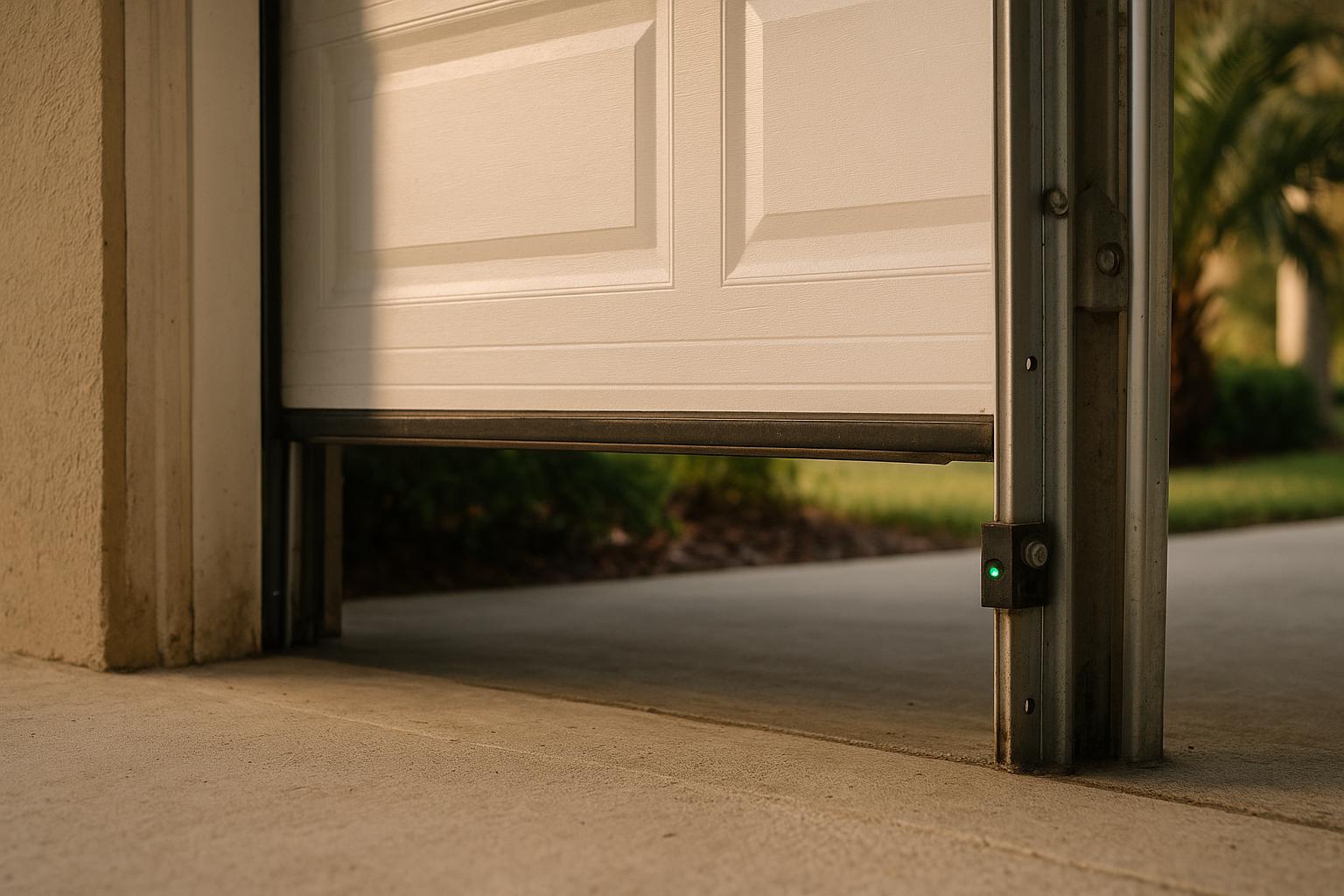
This is the number one cause of a garage door that reverses unexpectedly. Every garage door opener manufactured after 1993 is required to have photo-eye safety sensors mounted near the bottom of the door tracks, about six inches off the ground. These sensors send an invisible beam across the opening. If anything breaks that beam — a child, a pet, a bicycle, or even a cobweb — the door is designed to reverse immediately.
Here's what to check:
- Alignment: Look at the small LED lights on each sensor. If one is blinking or off, the sensors may have been bumped out of alignment. Gently adjust the sensor until both lights are steady.
- Dirt and debris: Orlando's pollen seasons and afternoon storms can coat sensor lenses with grime. Wipe both lenses with a soft, dry cloth.
- Sunlight interference: In some cases, direct afternoon sunlight can overwhelm the sensor's infrared beam. If this happens consistently at the same time of day, a small shade or cardboard tube around the sensor can help.
If cleaning and realigning doesn't solve the issue, the sensors themselves may be faulty and need replacement.
2. Incorrect Close-Limit Settings
Your garage door opener has close-limit settings that tell it how far the door should travel before it's considered fully closed. If these settings are off — even slightly — the opener may interpret the door hitting the ground as an obstruction and trigger the auto-reverse safety feature.
This is especially common after a new opener installation or if someone has recently adjusted the settings. On most openers, the close-limit adjustment is a small screw or dial on the back or side of the motor unit. Turning it in small increments can correct the problem.
A word of caution: Adjusting limit settings incorrectly can create a safety hazard. If you're not confident in making this adjustment yourself, it's best to call a professional. Our technicians in Orlando handle this type of calibration daily and can dial it in within minutes.
3. Worn or Broken Garage Door Springs
Your garage door springs do the heavy lifting — literally. They counterbalance the weight of the door so the opener doesn't have to work as hard. When springs wear out or break, the door becomes significantly heavier. The opener motor strains to move it, and the built-in force sensor may interpret that extra resistance as an obstruction, causing the door to reverse.
Signs of spring problems include:
- The door feels unusually heavy when you try to lift it manually
- You hear a loud bang from the garage (a sign a spring has snapped)
- The door opens unevenly or appears crooked
- The opener motor runs but the door barely moves
Spring replacement is not a DIY job. Garage door springs are under extreme tension and can cause serious injury if handled improperly. If you suspect a spring issue, contact a qualified garage door technician right away.
4. Obstructions in the Door Track
Sometimes the answer is simpler than you think. Small rocks, leaves, tools, or debris caught in the tracks can prevent the door from closing fully. The opener senses the resistance and reverses to protect against what it perceives as a blockage.
Inspect both tracks from top to bottom. Remove any visible debris and check for dents or bends in the track itself. Even a minor dent can cause enough friction to trigger a reversal. Bent tracks typically need professional attention to straighten or replace without damaging the door panels.
5. Worn Rollers or Damaged Tracks
Over time, the rollers that guide your garage door along the tracks can wear down, crack, or seize up. When rollers don't spin freely, the door meets resistance as it travels, which can fool the opener into thinking something is blocking the path.
Nylon rollers tend to last longer and run quieter than steel rollers, especially in Orlando's humid climate where metal components are prone to corrosion. If your rollers are visibly worn or your door sounds like it's grinding, a roller replacement can make a dramatic difference in how smoothly your door operates.
6. Issues with the Garage Door Opener Itself
If you've ruled out sensors, springs, tracks, and obstructions, the problem may be with the opener's logic board or motor. Electrical surges — common during Orlando's summer thunderstorm season — can damage the circuit board inside the opener. A failing motor may not generate enough force to close the door completely.
Signs of opener failure include:
- The opener light blinks a specific number of times (this is often a diagnostic code — check your owner's manual)
- The remote works intermittently
- The opener makes unusual humming or clicking sounds
- The door reverses even with sensors disconnected (for testing purposes only)
Depending on the age and condition of the opener, repair or replacement may be the most cost-effective solution. Modern openers offer improved safety features, smartphone connectivity, battery backup, and quieter operation — all worthwhile upgrades for homeowners in the Orlando area.
When to Call a Professional
Some of these fixes — cleaning sensors, removing track debris — are safe for most homeowners to handle. But anything involving springs, track repair, opener wiring, or force adjustments should be left to experienced technicians. Garage doors are the largest moving object in most homes and weigh anywhere from 150 to over 400 pounds. The risks of a DIY mistake simply aren't worth it.
At Precision Garage Door of Orlando, we diagnose reversal problems quickly and carry the parts needed to fix most issues on the spot. Whether you're in Winter Park, Kissimmee, Altamonte Springs, or anywhere in the greater Orlando metro, we'll get your door closing properly — and safely — again.
Don't Ignore a Reversing Garage Door
A garage door that won't close all the way isn't just inconvenient. It compromises your home's security, exposes your belongings to weather damage, and can signal a mechanical problem that will only get worse over time. If your door has been reversing and the basic troubleshooting steps above haven't solved it, give us a call. We show up on time, explain exactly what's wrong, and fix it right the first time — that's our promise to every customer we serve.